
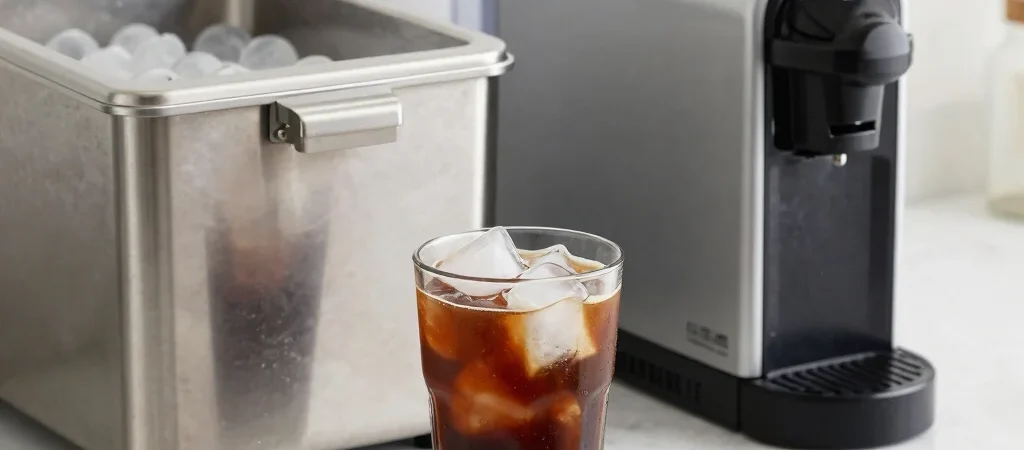
Countertop pebble ice makers have evolved from boutique commercial luxuries into ubiquitous fixtures on kitchen islands across social feeds. Behind the satisfying crunch of compressed ice flaking lies a complex mechanical system that requires realistic expectations regarding maintenance and kitchen footprint.
Ice Texture and Production Cycle Speed
These compact compressor units generate soft, chewable ice within seven minutes of cold water fill. The rapid continuous freezing cycle produces soft porous cylinders ideal for iced coffee, though output drops noticeably in warmer kitchen environments during summer months.
Unlike commercial machines with dedicated freezing line hookups, countertop models recirculate melted ice back into the reservoir. This continuous cycle keeps ice soft, but demands consistent water filtration to prevent mineral buildup inside the narrow internal pumps.
Noise Levels and Reservoir Maintenance
Operating decibels closely match a modern dishwasher during active freezing cycles, accompanied by periodic mechanical dropping sounds as ice transfers to the basket. Deep cleaning requires running vinegar flushes every two weeks to prevent mold in the internal silicone lines.
Key Takeaways for Buyers
For beverage enthusiasts who prioritize soft chewable ice above quiet operation, the convenience justifies the routine descaling maintenance. Practical buyers short on counter real estate should weigh the unit high power consumption against standard freezer tray convenience.


